Seeing a check engine light is always frustrating, especially when the car seems to drive perfectly fine. If your OBD2 scanner pulled a P1495 code, you are dealing with an emissions system fault, specifically in the evaporative emission control (EVAP) system. While this won't leave you stranded on the side of the road, it will cause your vehicle to fail a state smog check until it is fixed. Understanding what this code means helps you avoid unnecessary repairs and get straight to the actual problem.
What exactly is the P1495 code telling you?
The P1495 code points directly to a malfunction in the leak detection pump (LDP) solenoid circuit. The EVAP system captures fuel vapors from your gas tank and routes them into the engine to be burned. The leak detection pump pressurizes this system to check for cracks or loose gas caps. When the powertrain control module (PCM) detects an electrical issue or a mechanical failure inside the LDP solenoid, it triggers this fault. If you want a deeper breakdown of how these sensors interact, reading up on the specific EVAP component functions can clarify how the system monitors vapor pressure.
What symptoms will you actually notice?
Unlike engine misfires or transmission faults, an EVAP leak detection issue rarely affects how the vehicle handles. You will likely experience a very specific set of warnings:
- Illuminated check engine light on the dashboard
- Failing an emissions or smog inspection
- A faint fuel smell near the rear of the vehicle if the pump housing is physically cracked
Because the engine runs normally, many drivers ignore the light. However, ignoring it means the PCM cannot run its self-tests, which might mask other developing problems over time.
Why did the leak detection pump fail?
The LDP sits underneath the vehicle, usually near the fuel tank or charcoal canister. This location exposes it to road salt, water, and debris. The most common culprits include:
- Corroded or broken wiring harness connectors
- A seized or burnt-out LDP solenoid
- A blown fuse supplying power to the EVAP system
- Vacuum line leaks routing to the pump
Diagnosing the root cause requires checking the electrical circuit before throwing new parts at the car. A solid approach to pinpointing electrical faults in the EVAP circuit will save you from replacing a perfectly good pump.
Can I just clear the code and keep driving?
You can clear the code with a scanner, but it will almost certainly come back. The PCM runs an EVAP monitor drive cycle every time you drive under specific conditions, usually requiring a half-tank of gas and steady highway speeds. Once the computer tries to activate the leak detection pump and sees the circuit failure again, the check engine light will return. Clearing the code is only useful after you have made the repair and need to reset the monitors for an inspection.
How do you properly troubleshoot and fix it?
Fixing this issue starts with a visual inspection. Crawl under the car and look at the LDP and its wiring. Look for green corrosion on the pins or melted wires. Next, use a digital multimeter to check for power and ground at the pump connector while the key is in the "on" position. If the wiring has power but the pump does not activate, the pump itself is dead. For a step-by-step walkthrough on testing the voltage and checking vacuum lines, follow a detailed diagnostic routine for the leak detection circuit.
Some mechanics use custom digital dashboards to monitor live EVAP data streams while driving. If you are building a custom display screen for your scan tool, choosing a highly legible typeface like Oswald ensures the live sensor readings are easy to read at a glance.
What are the most common mistakes people make?
The biggest mistake is tightening or replacing the gas cap. While a loose gas cap triggers EVAP codes, P1495 specifically targets the pump's electrical solenoid circuit, not a general vapor leak. Another frequent error is replacing the powertrain control module because a scanner shows a communication fault. The PCM is rarely the issue; it is almost always a bad wire, a blown fuse, or a failed pump.
Your immediate action checklist
- Check the EVAP system fuse in your under-hood fuse box to rule out a simple power loss.
- Inspect the wiring harness connected to the leak detection pump for physical damage, chafing, or corrosion.
- Test the pump solenoid with a multimeter to confirm if it is receiving 12 volts when commanded.
- Replace the LDP only if power and ground are present but the unit fails to operate.
- Clear the code and drive the vehicle through a full EVAP monitor drive cycle to verify the repair.
 Vehicle Diagnostic Code P1495 Meaning
 Engine Error Code P1495 Meaning
 Troubleshooting Code P1495 Causes and Solutions
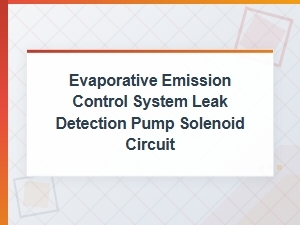 P1495 Code Definition and Explanation
 Code P1495 Vehicle Diagnostic Definition
 Meaning of Code P1495 Explained